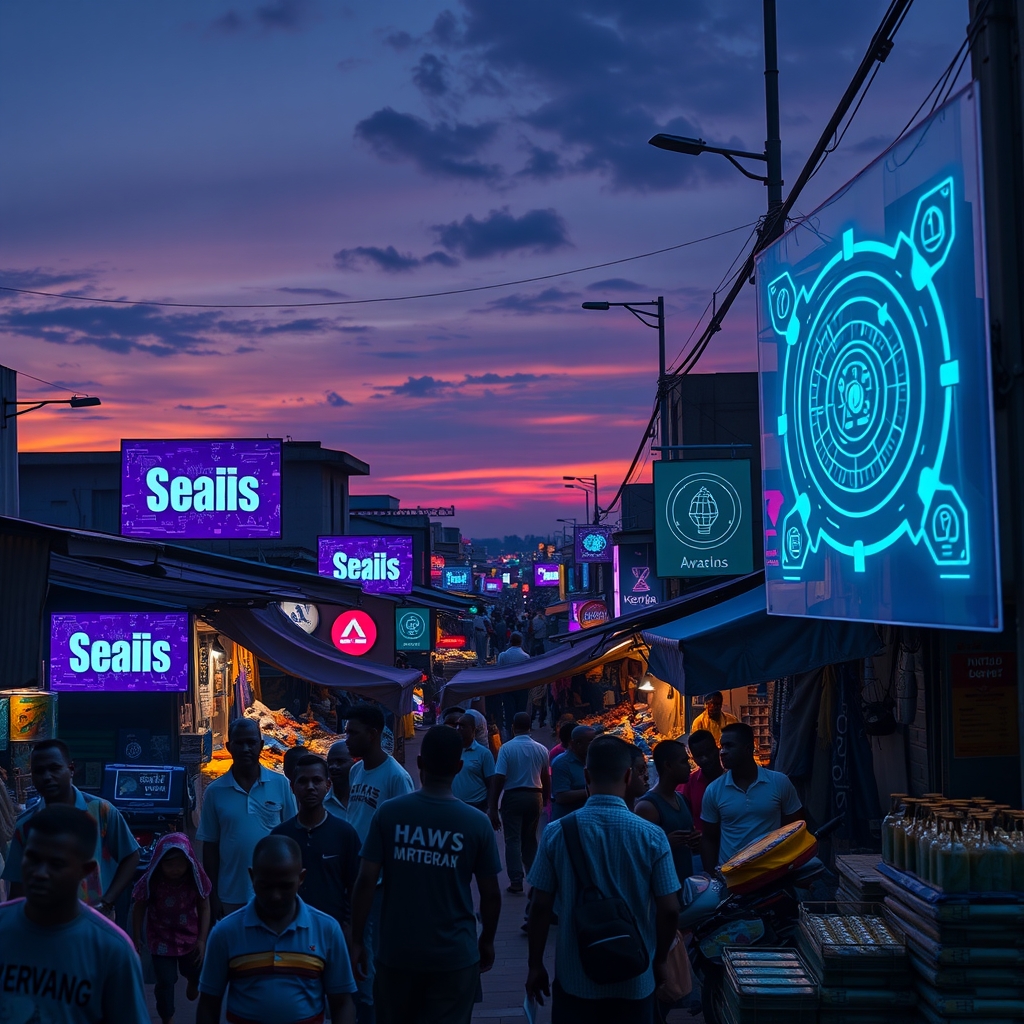
Imagine a Lagos‑based tailoring shop that suddenly receives orders from Abuja, Port Harcourt, and even London – all because a single web address appeared on a Google search. That scenario isn’t a fantasy; it’s the new baseline for small businesses in Nigeria.
Credibility in a hyper‑connected market
First impressions and trust signals
When a potential customer types a business name into a browser, the presence of a professional website acts like a digital storefront. It tells the visitor that the business is serious, reachable, and ready to serve.
"Before we launched a site, customers asked ‘are you real?’ After the site went live, the question changed to ‘when can we meet?’ – Chidinma, owner of a boutique in Ibadan."
Google visibility – the modern marketplace
SEO basics for Nigerian SMEs
Google remains the first point of discovery for more than 80 % of Nigerian internet users. A well‑optimised website can appear in the local pack, bringing organic traffic without a daily ad spend.
Even a modest 500‑page site, if structured correctly, can rank for dozens of long‑tail queries that competitors miss.
Turning WhatsApp chats into sales funnels
Embedding WhatsApp widgets and AI chatbots
WhatsApp is the de‑facto communication channel for Nigerian consumers, but a website can turn casual chats into a repeatable sales process.
Online payments – from cash‑only to digital wallets
Integrating local payment gateways
Cash still dominates many Nigerian markets, yet the pandemic accelerated the adoption of mobile money, card payments, and USSD‑based solutions. A website becomes the hub where these channels converge.
Automation – doing more with less
AI‑driven tools that run on a website
Automation isn’t about replacing staff; it’s about freeing them to focus on value‑adding work. A website can host a suite of AI services that streamline daily operations.
A pragmatic roadmap for 2026
Step‑by‑step implementation plan
Most small business owners hesitate because they see website development as a massive project. Breaking it into bite‑size phases makes the journey manageable.
Each phase can be executed by a single tech‑savvy employee or a modest freelancer budget. The total cost typically stays below ₦150,000, a fraction of the revenue lift observed in similar case studies.
The bottom line
A website is no longer a luxury; it is the central nervous system of a modern Nigerian small business. It builds trust, captures organic traffic, transforms WhatsApp chatter into measurable sales, enables secure online payments, and automates repetitive tasks. By 2026, businesses that ignore this digital spine will find themselves competing on a shrinking playing field.
Aliyu Lawan, Technology Specialist, Bytebinders Tech Solutions